

Safari packing is all about balance. You want to be prepared for early starts, warm afternoons, cool evenings, dusty roads, and luggage limits, without carrying half your wardrobe across the world.
Choose light, practical layers
Neutral, breathable clothing works well for most safari settings. Pack lightweight shirts, comfortable trousers, a warm layer for morning drives, a hat, and shoes that can handle dust and uneven ground. Avoid relying on one heavy item when two or three light layers will give you more flexibility.
If your itinerary includes small aircraft transfers, check luggage size and weight restrictions before you pack. Soft-sided bags are often easier to load and manage than hard suitcases.

What to keep in your daypack
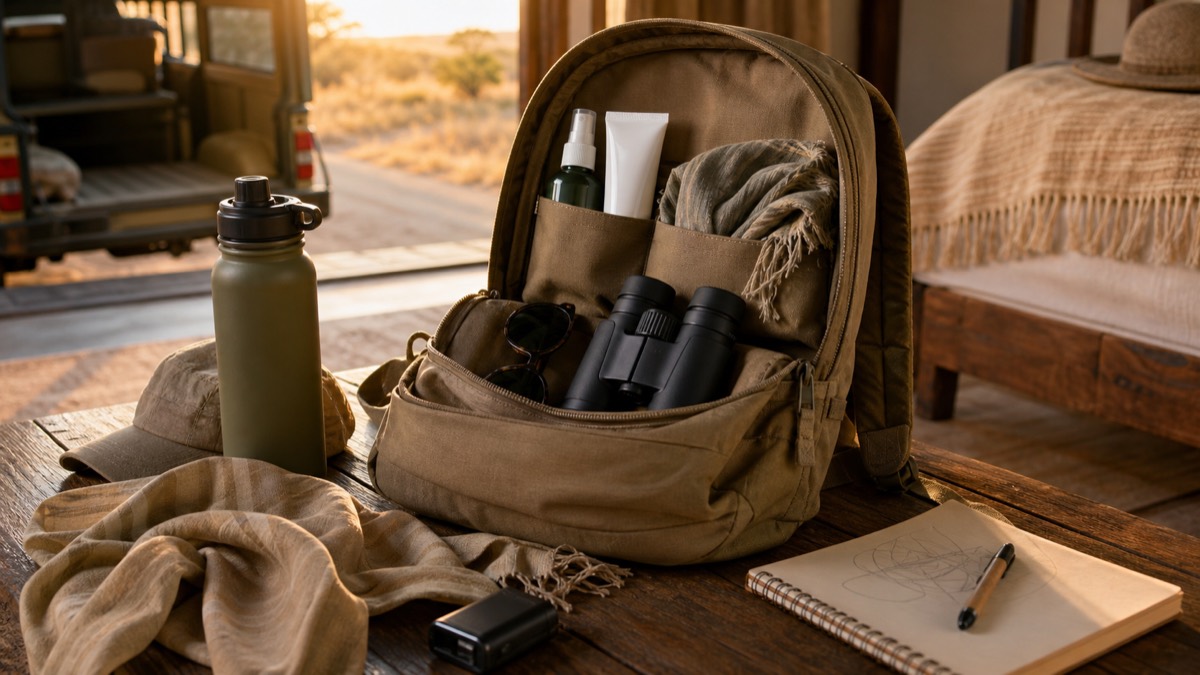
- Reusable water bottle and small snacks.
- Sunscreen, sunglasses, lip balm, and insect repellent.
- Binoculars, camera batteries, memory cards, and a lens cloth.
- Light scarf or buff for dust and changing temperatures.
- Copies of key documents and any medication you need during the day.
Do not forget the practical extras
A small first aid kit, charging cables, power bank, travel insurance details, and medication copies can make a big difference. If you are travelling in remote areas, prepare for limited shops and slower internet, especially between camps or lodges.
The aim is not to overpack. It is to pack thoughtfully, so every item earns its place and helps you enjoy the journey with less stress.